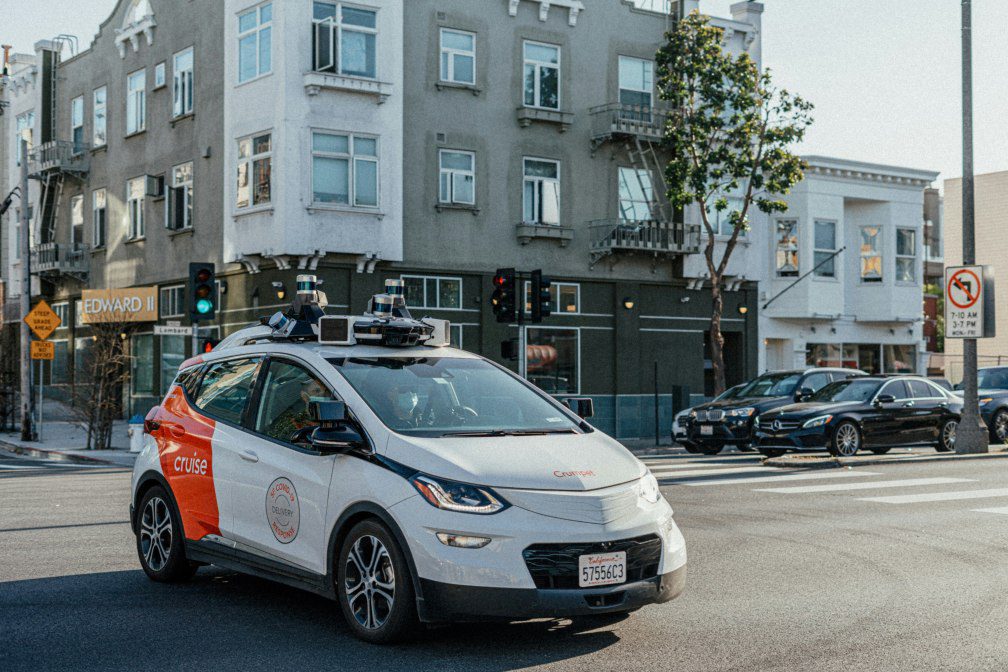
Self-driving cars are no longer a theoretical innovation. They are already operating on public roads in various levels of automation, assisting drivers, making partial decisions, and in some cases performing driving tasks with minimal human input. In parts of the United States, autonomous ride-hailing services are also being tested within limited, geofenced areas, reflecting a gradual transition from controlled deployment to broader real-world use.
While most discussions focus on the engineering behind autonomous systems, the more significant shift is legal rather than technological. Once decision-making moves from a human driver to an AI-powered software system, traditional legal frameworks begin to strain under questions they were never originally designed to answer. Courts are now required to determine whether responsibility lies with the vehicle operator, the manufacturer, or the software developer when an autonomous system contributes to a collision. This shift is forcing regulators and insurers to reassess long-standing assumptions about fault, negligence, and liability in motor vehicle law.
The central issue becomes straightforward in form, but complex in application:
When a vehicle operates autonomously, who is legally responsible when something goes wrong?
The Legal System Was Designed Around Human Control
Modern traffic and liability law was developed around a single foundational assumption: a human driver is in direct and continuous control of the vehicle. Every core rule within motor vehicle law is built on that premise, including how fault is assigned, how evidence is evaluated, and how responsibility is ultimately determined after an incident.
Because of this structure, legal liability has traditionally been assessed through human-centered standards such as negligence, recklessness, impairment, and failure to exercise reasonable care. In practice, courts evaluate whether a driver acted unreasonably under the circumstances, whether traffic laws were followed, and whether any form of human error contributed to the outcome of an incident. Even criminal traffic offenses, such as DUI or reckless driving, are fundamentally rooted in the idea that a person made a preventable decision that led to harm or increased risk.
Autonomous driving systems challenge that foundation by introducing a non-human decision-maker into scenarios that were historically governed entirely by human judgment. When a vehicle is operating under automated control, key questions that law traditionally assigns to a person—such as perception, reaction time, and decision-making, may instead be performed by software systems trained on sensor data and algorithmic models. Who is responsible when there isn’t a human driver to blame?
As a result, courts, regulators, and insurers are increasingly required to reinterpret long-standing legal principles in a technological context where “driver behavior” may no longer be the central point of analysis, and where responsibility may be distributed across multiple parties rather than assigned to a single individual.
Responsibility Becomes Distributed Across Multiple Parties

In autonomous vehicle cases, responsibility is no longer concentrated in a single individual in the way traditional traffic law assumes. Instead, liability begins to spread across multiple entities that each play a role in how the system operates, performs, and ultimately fails in real-world conditions.
Depending on the circumstances of a collision, potential responsibility may extend beyond the vehicle occupant to include the manufacturer that designed the hardware, the software developer responsible for the driving system, or the company operating the autonomous fleet. In some cases, third-party suppliers providing mapping data, sensor inputs, or machine learning infrastructure may also become relevant to determining how and why a system made a particular decision. This can turn a simple car accident insurance claim into a far more complex investigation involving system performance, data integrity, and cybersecurity consolidation across interconnected vehicle software systems to determine the underlying cause of the failure.
This creates a major shift in how legal causation is evaluated. Instead of focusing on a single moment of human error, courts may need to look at the full chain of events that led to the failure. What appears to be a simple incident on the road can actually involve multiple layers working together in the background, including system design choices, software behavior, sensor inputs, and real-time decision-making by the vehicle. In other words, a crash that looks straightforward on the surface may actually come from a combination of technical factors that interacted in ways that are not immediately visible.
As a result, autonomous vehicle cases are moving away from simple “who is at fault” questions and toward a more system-based approach to responsibility. Rather than pointing to a single driver or isolated mistake, courts and insurers may need to consider how different parts of the system contributed to the outcome. Instead of just a company or human driver being at fault, responsibility may extend across the teams of engineers and developers involved in designing, training, and deploying the system, depending on how the failure occurred. This can include manufacturers, software developers, and platform operators, each contributing in different ways to how the system functions in real-world conditions. Liability becomes less about a single point of failure and more about how responsibility is distributed across the entire system.
How Liability Insurance Works for Unoccupied Vehicles

As autonomous vehicles become more advanced, one of the most complicated questions is how insurance actually applies when there is no active human driver controlling the vehicle. Traditional auto insurance is built around a simple model: a person operates a vehicle, and if something goes wrong, liability is assigned based on human error and covered under a personal or commercial policy. At a certain point, insurers may even need to rethink what bodily injury coverage means when the ‘driver’ no longer has a body at all.
Autonomous systems disrupt that structure. When a vehicle is operating in a fully or partially autonomous mode, the question of “who is driving” becomes less clear, which directly affects how insurers assess risk, assign fault, and determine coverage. In some cases, liability may shift away from the driver entirely and toward product liability coverage held by manufacturers or software providers, depending on how the system was operating at the time of the incident. Imagine that — no liability insurance, no bodily protection, no worrying about the other person’s expense; you are now just paying for a product.
This creates a layered insurance environment where multiple policies may be triggered simultaneously. A single accident could involve the vehicle owner’s insurance policy, the manufacturer’s liability coverage, and potentially additional commercial or software-specific insurance held by companies operating autonomous fleets. Instead of a single claim being processed under one policy, disputes may arise over which insurer is responsible for covering specific portions of the loss.
At the same time, this shift forces insurers to rethink how risk is even priced in the first place. Traditional insurance models rely heavily on human behavior patterns such as driving history, age, location, and prior claims. With autonomous systems, those indicators become less relevant, because the “driver” is no longer the primary source of risk. Instead, insurers may need to evaluate entirely different factors such as software reliability, system versioning, update cycles, and even how frequently a vehicle relies on human override. This turns insurance from a behavior-based model into a technology-performance model, where risk is tied more closely to system design and operational consistency than individual conduct.
As autonomy expands, insurance frameworks will likely continue shifting away from individual driver behavior and toward system-based risk models that attempt to price and distribute liability across manufacturers, operators, and technology providers. Insurance quotes will likely see a dramatic shift, whether up or down, if the majority of people start owning and operating self driving cars.
The Future of Liability in Autonomous Systems

Autonomous vehicles are not only changing how people travel, but also how responsibility is defined when something goes wrong. What was once a straightforward legal structure built around human control is gradually being replaced by a more complex system where decision-making is shared between humans, software, and manufacturers.
As this transition continues, the law will be forced to adapt in real time. Courts, insurers, and regulators will need to navigate situations where fault is no longer tied to a single driver, but instead distributed across interconnected systems and the companies that build them. This creates a legal environment where accountability is less about isolated mistakes and more about how entire technologies are designed, deployed, and maintained.
At the same time, these changes are still unfolding. Many of the questions raised by autonomous systems do not yet have clear or consistent answers, and different jurisdictions are approaching the issue in different ways. Some states are more open to autonomous vehicle deployment, while others remain more restrictive, creating a fragmented regulatory landscape that could influence where and how these systems are ultimately allowed to operate. Federal regulation may also play a significant role in shaping how artificial intelligence systems in vehicles are deployed, which could further affect the pace and scope of adoption. The simple fact remains that we really do not know what the future will hold. That uncertainty is part of what makes this area of law so significant.
Ultimately, the shift toward autonomous driving represents more than a technological upgrade. It represents a structural change in how responsibility, liability, and risk are understood in modern society. And as the technology continues to develop, the legal system will need to keep evolving alongside it, redefining long-standing assumptions about control, fault, and accountability on the road.